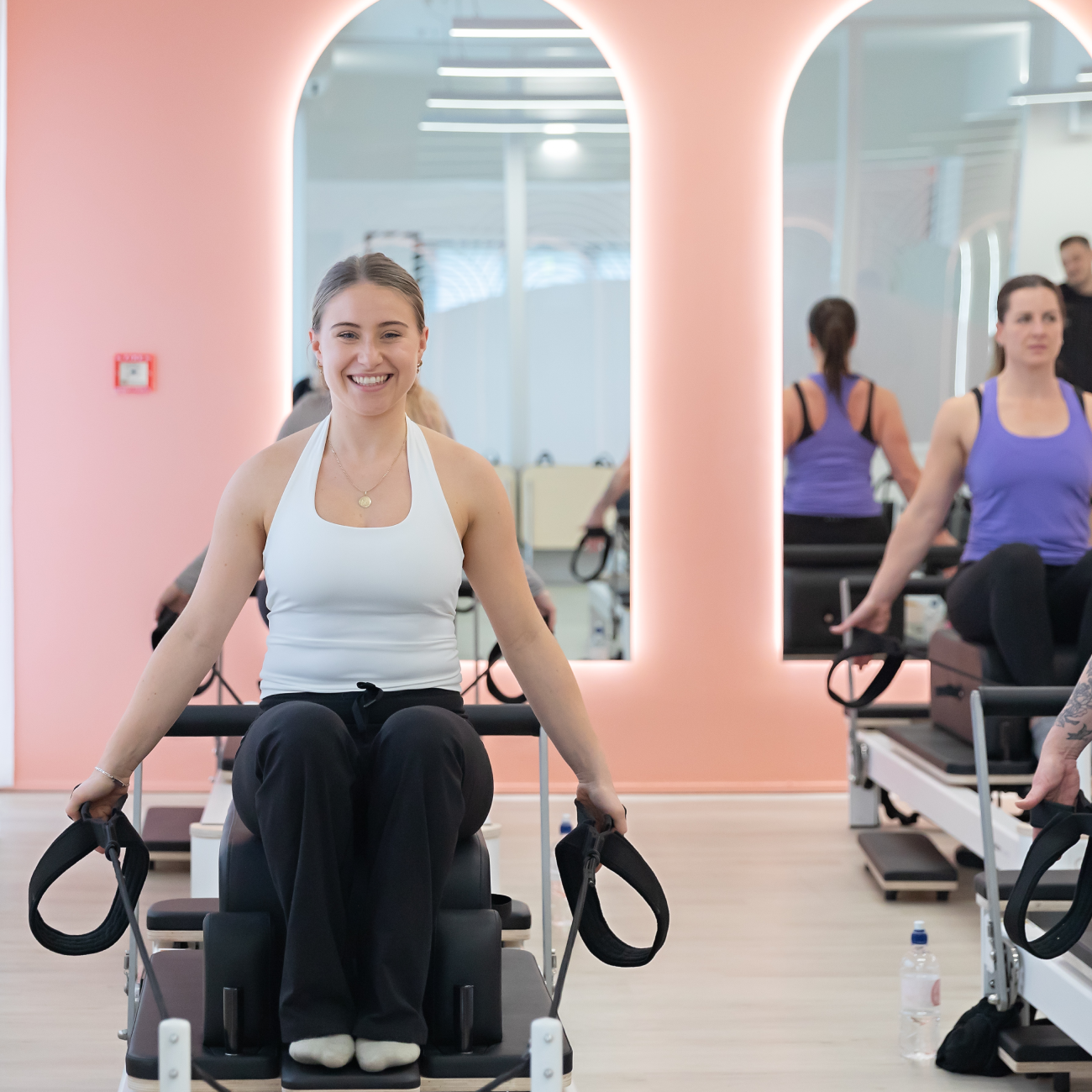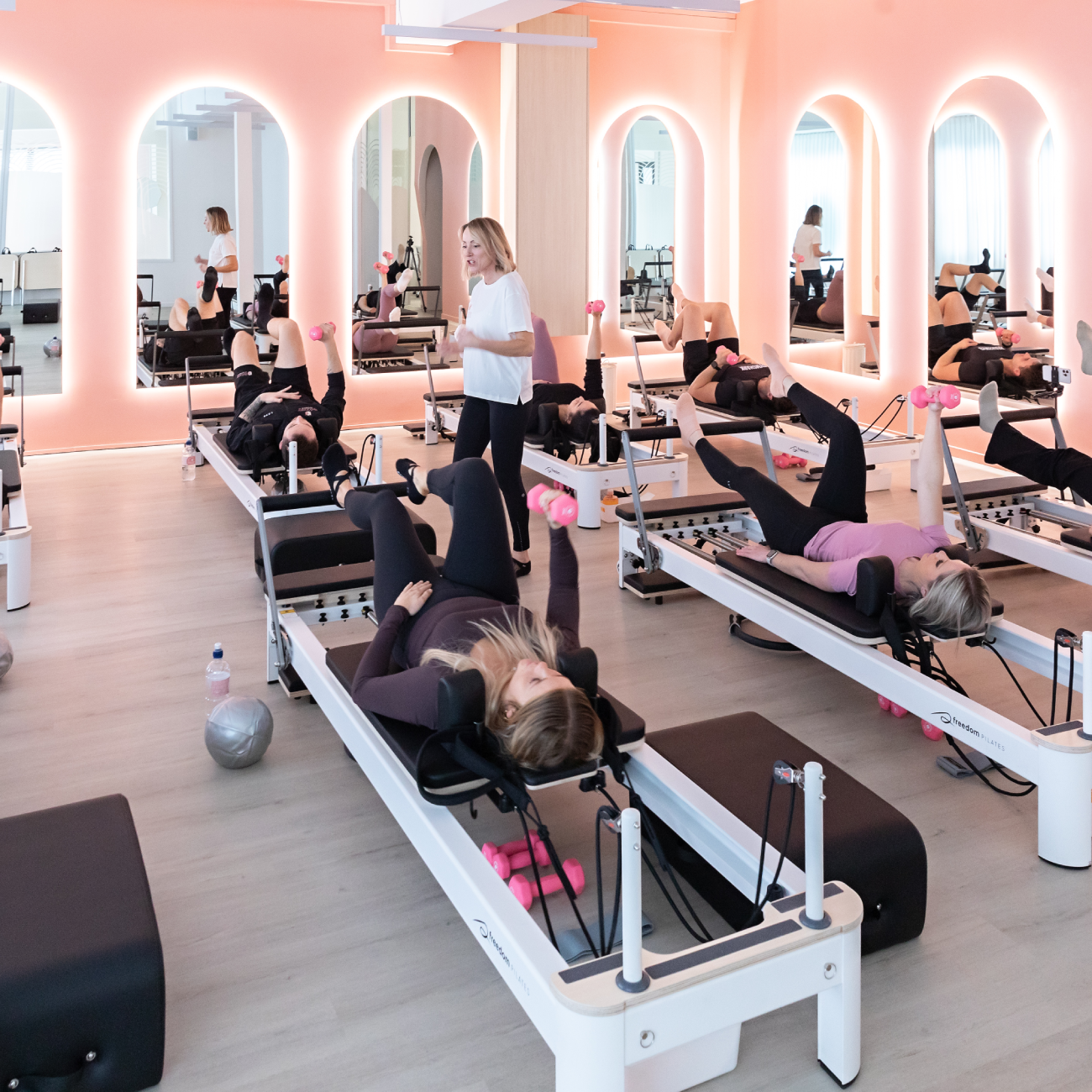
Standing outside a reformer pilates studio for the first time, peering through the windows at those sleek machines with springs, straps, and mysterious moving parts, it’s normal to feel a flutter of nervousness. Will you know what to do? Will everyone else be more experienced? What if you can’t keep up?
Take a breath. Every single person who now confidently glides through intermediate classes was once exactly where you are now: at the beginning, slightly intimidated, and wondering what they’d signed up for.
At Reformer Works in Howick, we see first-timers walk through our doors every week. Some are fitness enthusiasts adding something new to their routine, others are complete exercise novices, and many are somewhere in between. By the end of their first class, the overwhelming majority share the same reaction: “That wasn’t nearly as scary as I thought it would be.”
This guide will walk you through everything you need to know before your first reformer pilates class in Auckland, from what to wear to what that strange machine actually does, so you can step into your first session feeling prepared and confident.
What Actually Is Reformer Pilates?
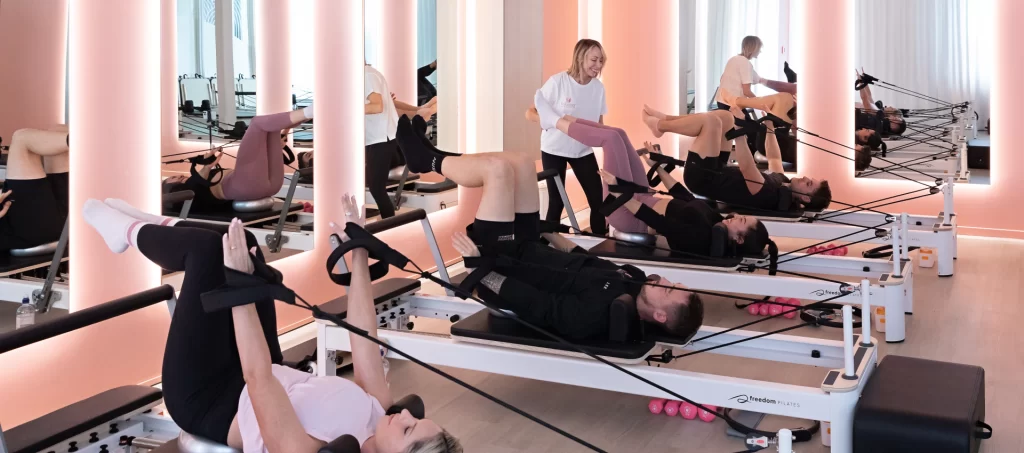
Before we dive into the practical details, let’s demystify what reformer pilates actually involves.
Traditional pilates happens on a mat using your body weight for resistance. Reformer pilates uses a specialised piece of equipment—the reformer bed—that looks intimidating but is actually designed to make exercises more accessible whilst simultaneously making them more challenging (yes, both at once).
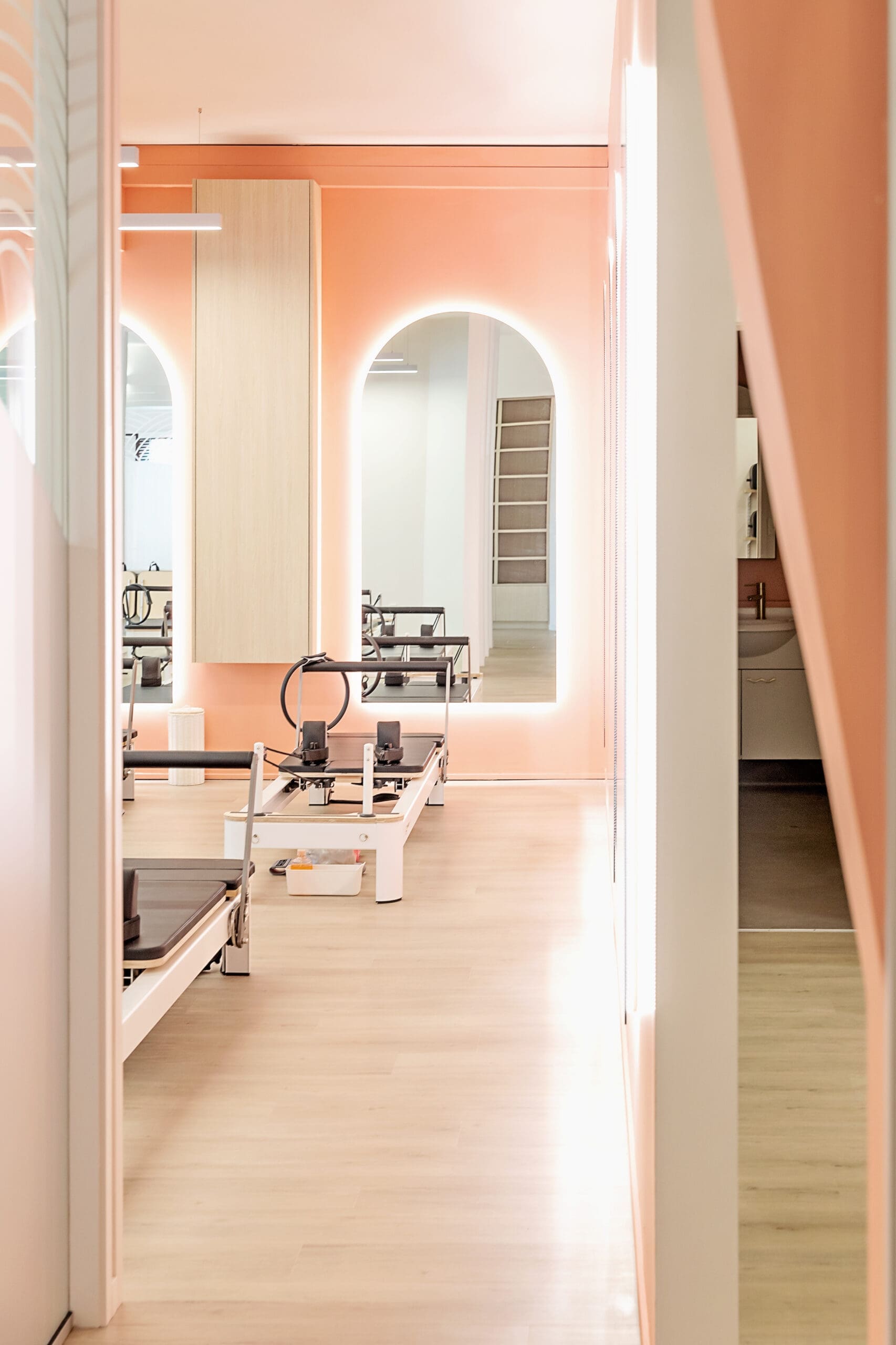
The reformer consists of several key components:
The Carriage: A flat platform that slides back and forth along a frame. You’ll lie, sit, kneel, or stand on this depending on the exercise.
The Springs: Attached underneath, these create adjustable resistance. At Reformer Works, we use Freedom Pilates reformers with colour-coded springs (typically yellow for lighter resistance, blue for medium, and red for heavier). More springs don’t always mean harder—sometimes they provide support that makes movements easier.
The Footbar: A bar at the end of the reformer that you’ll push against with your feet or hands.
The Straps: Attached to the carriage with handles or loops, these allow for arm and leg exercises using the spring resistance.
The Headrest: Adjustable for comfort during supine (lying down) exercises.
Don’t worry—you’re not expected to understand how all these parts work together before your first class. Your instructor will guide you through adjustments and explain what springs to use for each exercise. Within 2-3 sessions, it becomes second nature.
Why Reformer Pilates? The Benefits for Beginners
You might be wondering why reformer pilates, specifically, rather than mat pilates, yoga, or just hitting the gym. Here’s what makes it particularly effective for beginners:
Low Impact on Joints: The sliding carriage removes the impact element, making it gentler on knees, ankles, and backs compared to running or high-intensity workouts. Perfect if you’re returning to exercise after injury or simply want to avoid joint stress.
Scalable Resistance: Unlike body weight exercises, where you’re stuck with what you’ve got, reformer springs can be adjusted to make movements easier or harder. This means true beginners and advanced practitioners can work side-by-side in the same class.
Improved Posture: Hours hunched over laptops (hello, Auckland’s desk warriors) wreak havoc on spinal alignment. Reformer pilates strengthens the deep postural muscles that keep you upright and pain-free.
Full-Body Workout: You’ll work muscles you didn’t know existed—in a good way. Core, arms, legs, back, glutes—nothing escapes attention.
Mind-Body Connection: The focus required for controlled movements naturally creates a meditative state. You can’t think about tomorrow’s meeting when you’re concentrating on maintaining a neutral spine whilst your legs are in straps.
Faster Visible Results: Joseph Pilates famously said, “In 10 sessions you feel the difference, in 20 you see the difference, in 30 you have a whole new body.” The reformer’s resistance accelerates this process compared to mat work alone.
What to Wear to Your First Class
Getting dressed for your first class shouldn’t be stressful. Here’s the practical guide:
Form-Fitting Bottoms: Leggings or fitted shorts work best. Avoid loose tracksuit bottoms—they can get caught under the carriage or make it difficult for instructors to check your alignment.
Fitted Top: A snug t-shirt, tank top, or sports bra. Again, avoid oversized or baggy clothing that might get tangled in the springs or straps.
Grip Socks: Absolutely essential. Regular socks will have you sliding on the reformer’s surfaces, whilst bare feet aren’t hygienic for shared equipment. Grip socks provide traction and are required at most studios, including Reformer Works. If you forget yours, we have them available for purchase.
What to Skip: Trainers (you’ll work barefoot or in grip socks), jewellery that might catch on equipment, excessive perfume or cologne (you’ll be breathing deeply in close quarters).
For Women: A supportive sports bra is recommended since you’ll be in various positions, including inversions.
Think of your outfit as functional first, fashionable second. That said, if wearing your favourite activewear makes you feel more confident, go for it.
What to Bring
Keep it simple:
- Water bottle: You’ll need hydration, though you probably won’t sweat buckets in a beginner class
- Small towel: Some people like to have one for the reformer or to wipe their face
- Positive attitude: Genuinely, the most important thing you’ll bring
What you don’t need: yoga mat (the reformer is your “mat”), weights (we provide all props), or excessive gym bag paraphernalia.
Eating and Drinking Before Class
Timing your pre-class nutrition can make or break your experience.
Ideal Scenario: Eat a light snack about 1-2 hours before class. Something like a banana, a small handful of almonds, or yoghurt provides energy without sitting heavily in your stomach.
What to Avoid: Heavy meals within 2 hours of class. You’ll be bending, twisting, and occasionally inverting—a full stomach makes this deeply unpleasant.
Hydration: Drink water steadily throughout the day rather than chugging a litre right before class.
Arriving at the Studio
Plan to arrive 10-15 minutes before your first class. This buffer time is crucial for several reasons:
Paperwork: You’ll likely need to fill out a brief health questionnaire covering injuries, medical conditions, or concerns.
Studio Tour: First-timers get shown where to store belongings, where the loos are, and how the studio layout works.
Meet Your Instructor: This is your chance to mention it’s your first class, ask questions, and flag any injuries or concerns. Never feel embarrassed about being new—instructors genuinely appreciate knowing so they can provide extra guidance.
Equipment Orientation: Your instructor can show you the reformer basics before class starts when you’re not trying to follow along with everyone else.
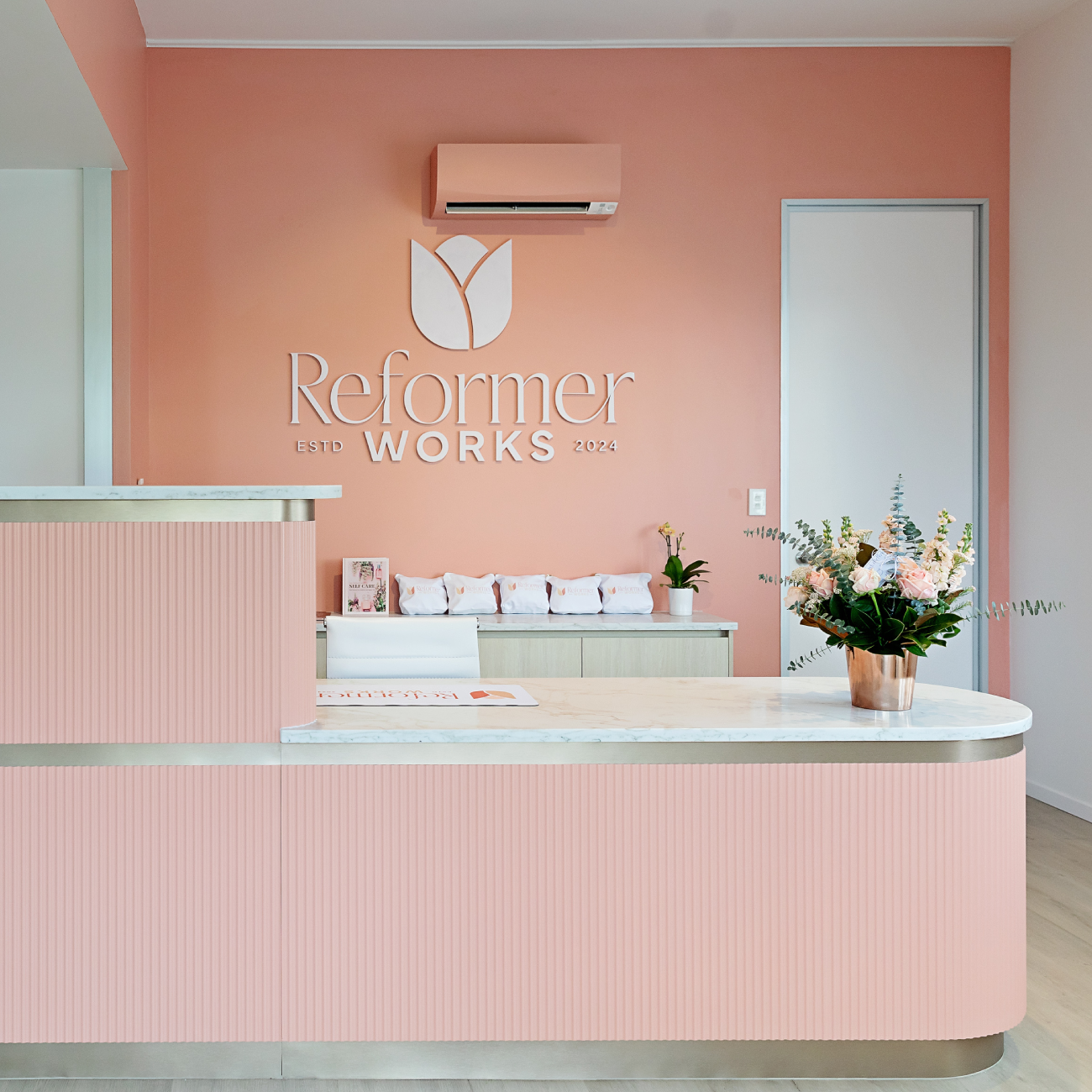
At Reformer Works, our front desk team and instructors are particularly attentive to first-timers. We want you to feel welcomed, not overwhelmed.
Understanding Class Structure
Most reformer pilates classes follow a similar flow, though exact formats vary by studio and instructor. Here’s what to expect in your first beginner class:
Warm-Up (5-10 minutes)
Classes typically start with gentle movements to prepare your body. This might include:
- Footwork on the footbar to warm up legs and establish the breath-movement connection
- Simple arm movements using the straps
- Pelvic curls to engage your core and warm up your spine
The warm-up is also when you’ll get comfortable with the sensation of the carriage moving beneath you. It feels strange initially—you’re the one making it move, but your brain expects the floor to be stable. Give yourself grace. This “clicking into place” usually happens within the first 10 minutes.
Main Workout (35-45 minutes)
The heart of the class targets different muscle groups through a variety of exercises. In a beginner class, expect:
Lower Body Work: Exercises like leg presses, side splits, and leg circles strengthen legs and glutes whilst engaging your core for stability.
Upper Body Work: Using the straps, you’ll work arms, shoulders, and back through movements like rowing, chest expansion, and arm circles.
Core Work: Everything in pilates engages your core, but specific exercises like the hundred, roll-ups, and planks really target those deep abdominal muscles.
Back and Spine: Extensions, stretches, and articulation exercises promote spinal mobility and strength.
Your instructor will guide you through spring changes (e.g., “Move to one red spring”) and setup adjustments. Don’t worry about memorising this—they’ll repeat it every time, and you’ll see what your neighbours are doing.
Cool-Down (5-10 minutes)
Classes end with stretching and lengthening exercises. This helps prevent soreness, promotes flexibility, and brings your heart rate back down gradually. It’s also when you’ll really feel that sense of having “worked” your body without having destroyed it.
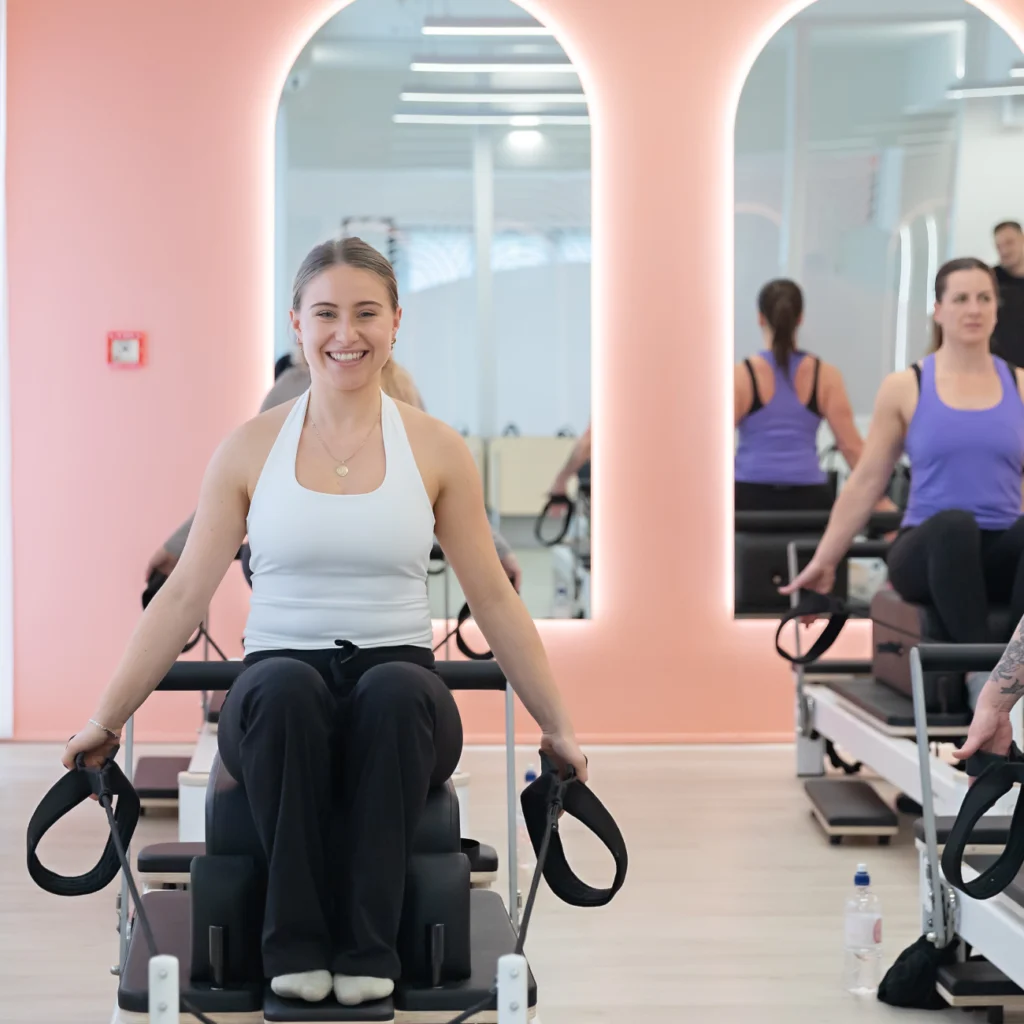
What It Actually Feels Like
Let’s get honest about the physical experience:
The Carriage Movement: At first, the sliding carriage feels weird. You’re horizontal on a moving surface, which your inner ear isn’t expecting. Within 10-15 minutes, your brain adapts and it feels normal.
The Muscle Burn: Reformer pilates creates a specific type of fatigue—a deep muscle tremor rather than the gasping exhaustion of cardio. You might feel muscles shaking, especially in your core and legs. This is normal and actually means you’re working the right muscles.
The Mental Focus: You can’t zone out during pilates. The precise nature of movements requires constant attention to form, breathing, and control. This is part of why people find it meditative—there’s no brain space left for worrying about other things.
The Next Day: Expect some muscle soreness, particularly in your core, inner thighs, and possibly your arms. This is DOMS (Delayed Onset Muscle Soreness) and indicates you’ve worked muscles in new ways. It’s not injury—it’s adaptation. It typically peaks 24-48 hours after class and fades within 3-4 days.
Common First-Timer Worries (and Why They’re Unfounded)
“Everyone else will be fitter than me”
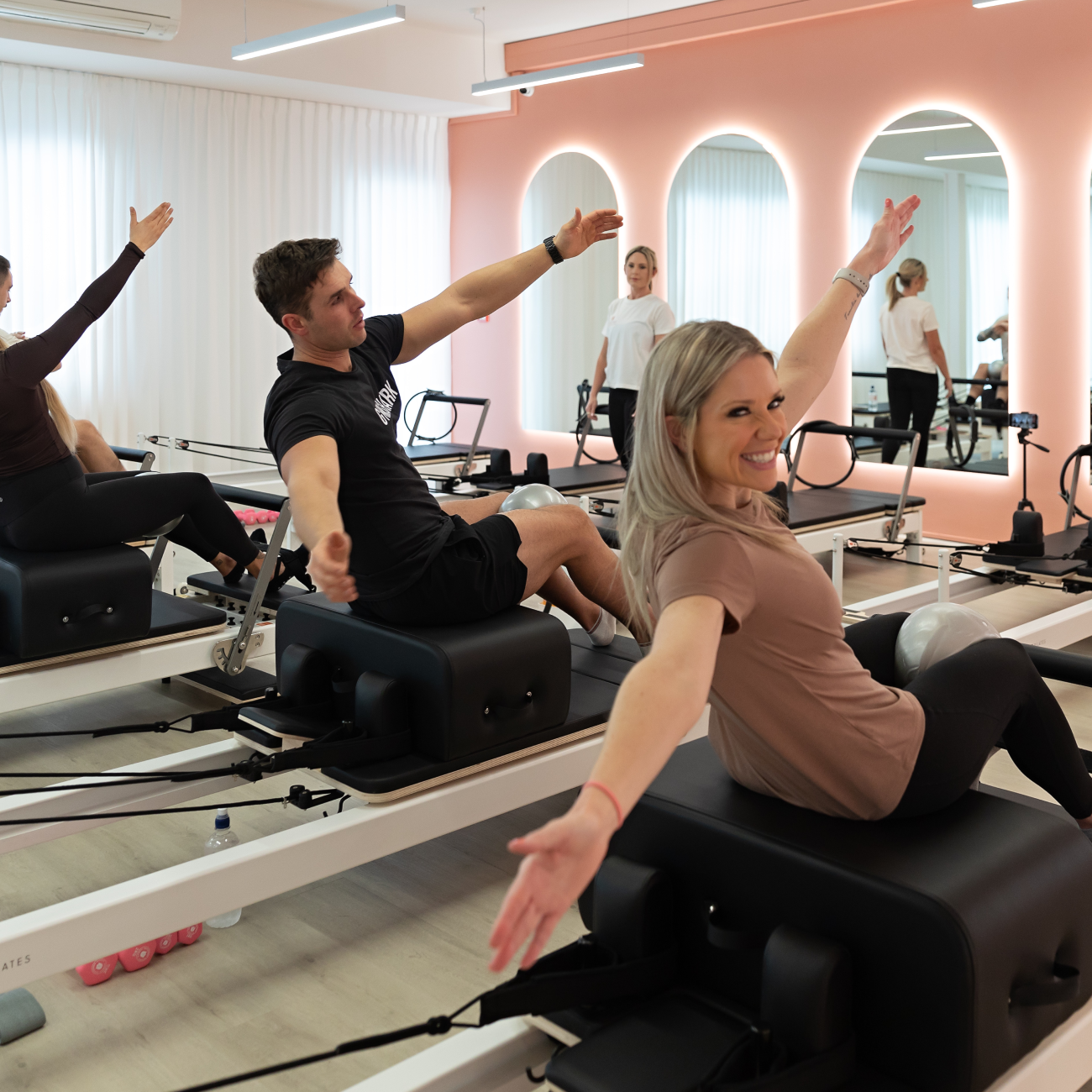
Beginner classes at Reformer Works are specifically designed for people new to pilates or returning after a break. You’ll be alongside others in the same boat. Even if someone looks more confident, remember they were once a first-timer too. Pilates culture is remarkably non-competitive—everyone’s focused on their own practice, not judging others.
“I’m not flexible enough”
Reformer pilates improves flexibility; you don’t need to arrive flexible. The reformer actually helps you stretch safely within your current range of motion, then gradually expand it. If you can’t touch your toes, that’s fine. If you can fold yourself in half, also fine. Your instructor will meet you where you are.
“I’ll look stupid not knowing what to do”
Your instructor will guide you through every movement. If you’re confused, they’ll come over and physically show you. If you need extra help, they’ll provide it. Looking “stupid” isn’t a thing that happens—looking like a beginner who’s learning is what happens, and it’s completely normal and expected.
“I’m not strong enough”
The springs can be adjusted to make exercises easier. The resistance is customisable to your current strength level. You’ll never be asked to do something your body isn’t ready for. Progressive difficulty is built into the method.
“I won’t be able to keep up”
Beginner classes move at a manageable pace with time for transitions and adjustments. Unlike high-intensity classes where you’re racing through movements, pilates is about control and precision. Taking your time to do movements correctly is more important than speed.
Pilates Terminology You’ll Hear
Don’t be intimidated by the lingo—your instructor will demonstrate everything. But knowing a few key terms helps:
Neutral Spine: The natural curves of your spine are maintained (slight curve in lower back, not pressed flat or over-arched).
Imprint: Pressing your lower back into the carriage, flattening the natural curve. Used for certain core exercises.
Core Engagement: Activating deep abdominal muscles by drawing navel toward spine without holding your breath.
Table Top: Legs lifted with knees bent at 90 degrees, shins parallel to the floor.
Footbar: The bar your feet press against (the instructor will say things like “heels on the footbar”).
Red Spring, Blue Spring, Yellow Spring: The colour-coded resistance springs. Your instructor will tell you which to use.
Carriage: The moving platform you lie/sit/stand on.
Straps: The handles attached to the springs for arm and leg work.
You absolutely do not need to memorise these. Just listen to your instructor’s cues and watch their demonstrations.
How Often Should Beginners Do Reformer Pilates?
We recommend starting with 2-3 classes per week for optimal results. This frequency allows your body to adapt whilst providing enough recovery time between sessions.
Once per week: You’ll maintain and see slow progress, but improvements will be gradual.
2-3 times per week: You’ll see noticeable changes in strength, flexibility, and body awareness within 4-6 weeks.
4+ times per week: For those who really fall in love with it, this accelerates results. Many of our members eventually move to unlimited subscriptions because they genuinely enjoy the practice.
What Happens After Your First Class
Most people leave their first reformer pilates class feeling:
- Taller (seriously—spinal decompression does this)
- More aware of their posture
- Accomplished (you tried something new!)
- Slightly confused (there’s a lot to take in)
- Curious to come back
The confusion is normal. Second and third classes feel exponentially easier as your brain starts recognising movement patterns. By class five, you’ll wonder why you were ever nervous.
Some people experience immediate addiction—they book their next class before leaving the studio. Others need time to process whether pilates is for them. Both responses are valid.

Top Tips for Success
1. Communicate with Your Instructor: Mention injuries, concerns, or if something doesn’t feel right. Good instructors want this information.
2. Focus on Your Own Practice: Comparison truly is the thief of joy. The person next to you might be on their 100th class—you’re on your first. That’s fine.
3. Breathe: Holding your breath during exercises is common for beginners. Your instructor will remind you to exhale on effort, inhale on release. Proper breathing enhances every movement.
4. Less is More: Smaller, controlled movements with perfect form beat large, sloppy movements every time. This isn’t about how far you can move—it’s about how well you move.
5. Ask Questions: If you don’t understand a cue or adjustment, ask. Instructors would rather clarify than have you struggle silently.
6. Be Consistent: The body adapts to regular stimulus. Sporadic classes won’t create the same results as consistent practice.
7. Trust the Process: You won’t “get” everything immediately. That’s expected. Pilates is a practice, not a performance.
The Reformer Works Difference
What sets our Howick studio apart for beginners:
Small Class Sizes: With 15 reformer beds maximum, instructors can provide genuine individual attention.
Specialist Instructors: Our team includes specialists in injury rehabilitation, scoliosis, osteoporosis, and active ageing—not just generic certifications.
NZ-Made Equipment: Freedom Pilates reformers are premium quality with consistent, smooth operation.
Beginner-Friendly Culture: We see first-timers every week and have refined our onboarding process to eliminate intimidation.
Flexible Options: Try a casual class or small pack before committing to subscriptions.
Accessible Location: Free parking right outside (a rarity in Auckland!), with easy motorway access from across East Auckland.
Ready to Start?
Your first reformer pilates class is a beginning, not a test. You don’t need to arrive fit, flexible, or experienced. You just need to arrive willing to try something new.
At Reformer Works, we specialise in making beginners feel confident and capable. Our instructors remember what it was like to be intimidated by the reformer for the first time, and they’re genuinely passionate about sharing this transformative practice with new people.
Browse our timetable and book your first class. Choose a beginner session at a time that suits your schedule—we run classes 7 days a week, starting from 5:45am.
Arrive 10 minutes early, let us know it’s your first time, and we’ll take care of the rest. Wear something comfortable, bring your water bottle, and leave your nerves at the door.
Your body is going to thank you for this.
Reformer Works Pilates Studio
Location: Howick, Auckland
Website: https://reformerworks.co.nz/
Beginner classes available 7 days a week. First-timers welcome. Free parking. All equipment provided. Grip socks available for purchase.
Book your first session today and discover why reformer pilates is Auckland’s fastest-growing fitness trend.